
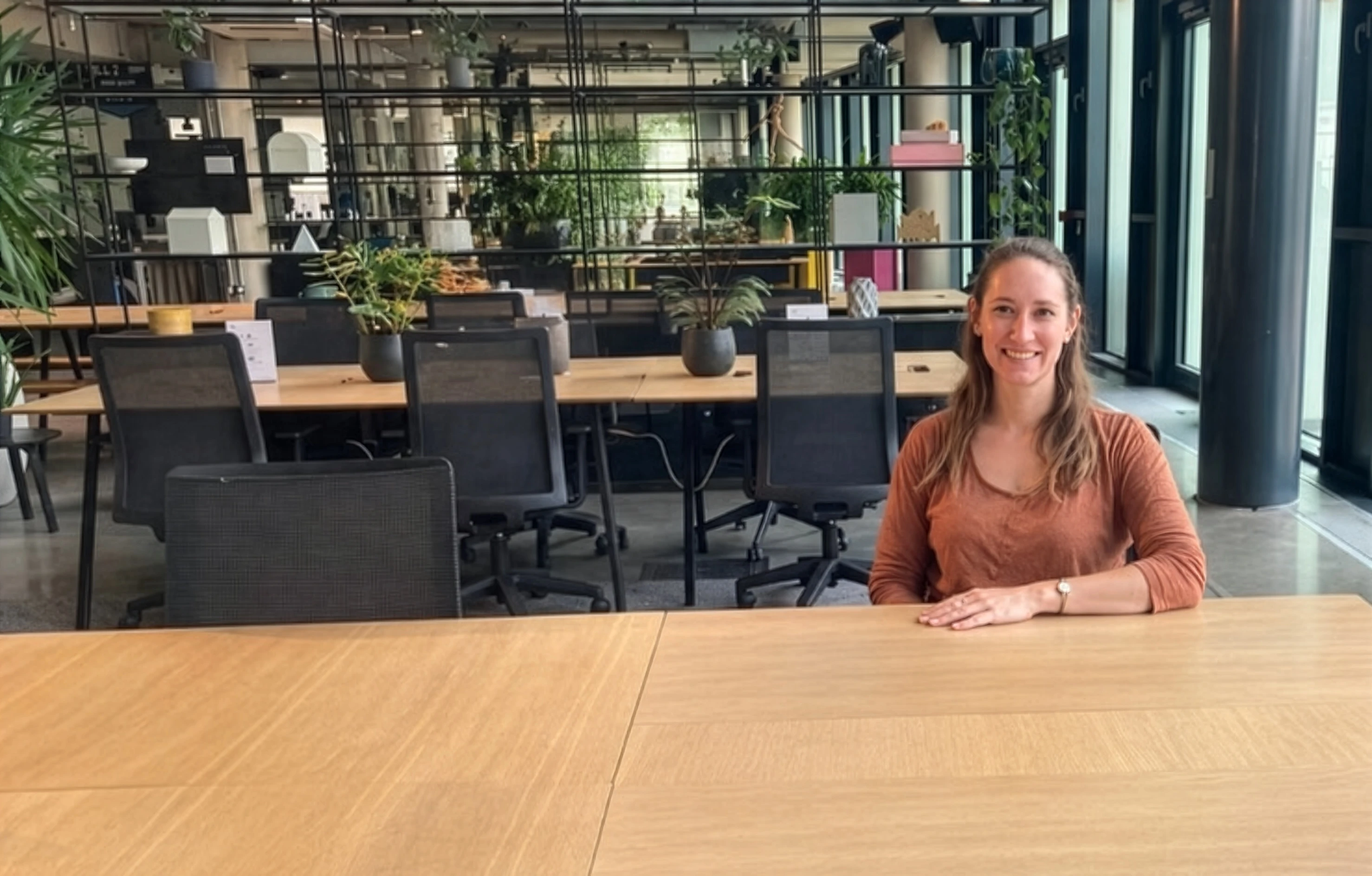
In Conversation With Rachel Boyd-Moss: Finding the Order in How Work Really Happens
Rachel Boyd-Moss, an implementation partner for Kinabase, is a quality systems and process expert who helps growing businesses put order into how they work, then builds that order into Kinabase. She has configured plenty of software over the years, and she does not put it in front of a client lightly. We sat down with her to talk about how she works and where a business system like Kinabase belongs.
From compliance to data
Rachel’s route into business systems came through her work with quality management systems. Much of that work centres on ISO, the internationally recognised standards a business gets certified against to prove its quality and consistency. The more she helped companies get certified, the more she found herself thinking about where their information actually lived.
“It all comes from the ISO background. Originally, it was very much focused on helping companies get certified, and through that I became a lot more involved in data management than I might have expected, because a big part of ISO is: where is the data, and can you find it? That means software. So, I became much more involved in business systems, through learning on the job more than deliberately going into it. I really like data structures; it’s always been something that’s worked quite well in my brain.”
She had seen Kinabase around the network before she looked at it properly. What changed in her mind was an hour with our Managing Director, Jason Mashinchi, set against a run of software demos that had left her cold.
“I’d had a couple of other software demos around the same time which were all really disappointing. That meeting with Jason was about an hour, and every single question I threw at him, he could just answer. There was always a way to do something in Kinabase, and I was mind blown. I’d never come across software that could do this. It just works in the simple way you want software to work. It’s not trying to overcomplicate anything, the information is just right there, and what you see is what you get.”
What she looks for, and what it’s like to build
Before Rachel will show a tool to a client, it has to pass a test that has nothing to do with features. It must be obvious.
“The first thing that always strikes me is the user interface. Is it immediately obvious where the information is? With an interface like Kinabase, it is clean and I know exactly where everything is. I hate it when you go into software and it looks like it was written in 2005 or you’re thinking, which of your weird emoji things means anything.”
During configuration, Rachel found that Kinabase narrates the logic she has built back to her.
“Incredibly intuitive. One of the greatest things you’ve done is the thing you do with verbs. You conjugate everything, so when you’re building something, you’ve written out exactly what it does, which is really useful. Sometimes I read that back and think, that’s not what I wanted it to do, which is a good thing to catch.”
When working with a Kinabase solution, Rachel can focus on the customer needs and know that changes can be quickly implemented to suit.
“The software side of Kinabase tends to be the quickest bit. It’s the scoping work that takes the time, because once it’s in the software, you can only call something one thing, so you need to bring that alignment.”
Changing how a team works
A large part of Rachel’s job is not software at all. It is encouraging people to work differently, which she does by starting from what they already recognise.
“I always start with what they know, and then iterate through changes to something that still feels familiar but is improved. As we progress through testing, often the language businesses use changes, so rather than a quote, we should call it a proposal.”
That kind of change lands more easily because the interface is already familiar.
“The biggest thing on training is that it looks like a spreadsheet, which is a concept everyone knows and understands. Kinabase is like the best version of the spreadsheet, which makes it really easy to train people, because it’s basically a really interactive spreadsheet, and it’s familiar to people.”
Her work with Form the Future shows how far that change can reach. The software is the vehicle, and the destination is a different way of running the business. That includes standard operating procedures, the written guidance for how each task should be done.
“What we’ve had to do with Form the Future is not just a software implementation; there’s a business transformation going on at the same time, and the software is a really nice way to push those changes through. Even standard operating procedures are accessed and controlled through Kinabase. It’s one system holding all the guidance on how to do the work, as well as the place where they actually do it. File storage in Kinabase has also been a massive win. I’m very much a SharePoint lover, but many people are using it as an online version of Windows File Explorer, which gets out of control. When you have a system that runs that for you, you’re not actually using a folder system, and that’s made a massive difference. There was one classic example where someone didn’t know where all of their spreadsheets were stored, so they’d bookmarked them all in their browser: a new, innovative way to avoid good document management.”
Form the Future have been receptive to change and have shown enthusiasm for developing an improved way of working. Rachel takes her change management approach from her experience of implementing quality management systems.
“I’m not just coming in and saying, ‘the way you did that isn’t good, let’s do it this way’. I refer to the process mapping and say, ‘I’ve taken on board what you said works about your previous system, this is what you said was broken, and this is how I’ve tried to fix those things, what do you think?’ That comes from an ISO background, because if you come in with ISO and say, this is the procedure, go and do it, people push back. You bring people along on the journey, because you’re asking them to make a much bigger change than you are.”
Support, and the right tool for the job
For Rachel, confidence in a system comes down to what happens when something stalls.
“If I start a job in the morning and get stuck, I know it’s still going to get done today, because I’m going to get a response from the Kinabase team. Even when I’ve sent emails where I thought, I know the software can’t do this, I’m just logging it because I really want it, I’ve got back a full response from support. There have been times where I thought, I think this is the best way to do this, is this right, and I’ve got back full replies, with screenshots, saying, we set this up, we demoed it, hop on a call if you want.”
She is just as clear about where the tool fits, and where it does not. Kinabase is built for the processes a team repeats, not the one-off project.
“It’s knowing a software’s strengths and using them for the right things. For instance, project management in isolation is not something I suggest Kinabase for. It’s developed as a workflow management tool. If you know exactly what process you want to do, and you want to do that process 10,000 times, that’s what it does, and it does it really well. It’s when clients are getting into a routine that you need workflow management and process control.”
The case for it, and where it goes next
Asked what she would say to someone weighing up Kinabase against something heavier, such as a full ERP system, the large, all-in-one software a company runs its whole operation on, Rachel goes straight to cost and speed.
“How instant the implementation is. When you look at an ERP system for a small company, it’s around £10,000 up front with a three-month implementation, and then if you don’t get what you want, tough. In three months’ time, all your processes have changed, so what you get is not what you want, ever. Whereas with Kinabase, you can set it up and be running within a day, and then you can iterate on that. When processes change, you just go in and change it. You do have to put a system in place for how you’re going to manage what you change, but Kinabase has put in a lot of guardrails. It means I’m not scared, because I don’t want to make a client rely on me, ever. At some point I’m going to be training up super users, and I’m not scared to do that, because you’d have to struggle to break Kinabase.”
Where she sees this going is close to home. The quality management systems she has built by hand for years turn out to be the same shape as the thing Kinabase does best: in both cases, a documented set of processes a business repeats to keep its work consistent.
“You can build out a system that’s almost like your QMS, but you can repeat it with your clients. You have something templated, ready to go, that can be done quickly. Kinabase is just repeatable workflows, and a QMS is just repeatable workflows.”
Put the work in order, and the compliance will follow.
Get in touch with our team to find out more about working with our implementation partner Rachel Boyd-Moss.
Recent Articles

AI Workflow Management: How Intelligent Automation is Reshaping the Way Teams Work
AI workflow management uses artificial intelligence to automate, monitor, and optimise business processes — here's what it means for SMEs in 2026.
AS9100 Nonconformance Software: Connecting NCRs, Work Orders, Serials, and CAPA
AS9100 nonconformance software connecting NCRs, work orders, serials, and CAPA in one system — so audit-ready traceability takes minutes, not days.

Digital Transformation Tools for UK Businesses: What to Invest in Right Now
The digital transformation tools UK businesses should prioritise in 2026: cloud, AI automation, integrated data platforms, and cybersecurity.